Develop your feral pig plan of action

A pest management plan – whether working as an individual land manager or in a group – should be based on a set of clear, measurable and if possible, time-limited objectives that are aimed at reducing the level of pest animal damage to an acceptable level.  Where the level of damage is not known or poorly understood, objectives related to a reduction in pest density can be used as an indication of a reduction in damage. The objectives should be SMART, that is:

  • Specific – what exactly will be accomplished by who, where and why?
  • Measurable – how will success by demonstrated?
  • Achievable – is it within the means (financial or otherwise) of the group or individual responsible?
  • Relevant – does it relate to the group or individual’s key responsibilities? Does it link in with other objectives and the broader plan?
  • Time-bound – when will it happen and how often? Are there other deadlines that need to be met (e.g. budget or reporting)?

What are the management options?

At this point, the group should investigate all management options and decide what action to take.  Depending on the dynamics of the situation, the group might evaluate:

  • control techniques – e.g. poison baiting, ripping, aerial or ground shooting, trapping, or a combination of techniques
  • management strategies – e.g. one-off control or sustained management
  • equipment and access to skilled labourers
  • availability of funding now and over the life of the plan.

It is also important to consider whether management is socially and politically desirable, and if it is actually practical, given the level of resources.

Find Group Management Planning Templates from the National Feral Pig Action Plan

Do a risk/benefit analysis:

Once management actions have been decided upon, the group should weigh up the expected costs and risks of pest management against the likely benefits and outcomes.  If the plan is going to be expensive to implement or has the potential to harm people, other animals or the environment, then it is important to consider if the social, environmental and economic benefits will be worth the risk and/or the financial outlay. Sometimes a management plan is implemented because the risk of not doing something about the problem is greater than the undesirable outcomes of management.

National Feral Pig Action Plan

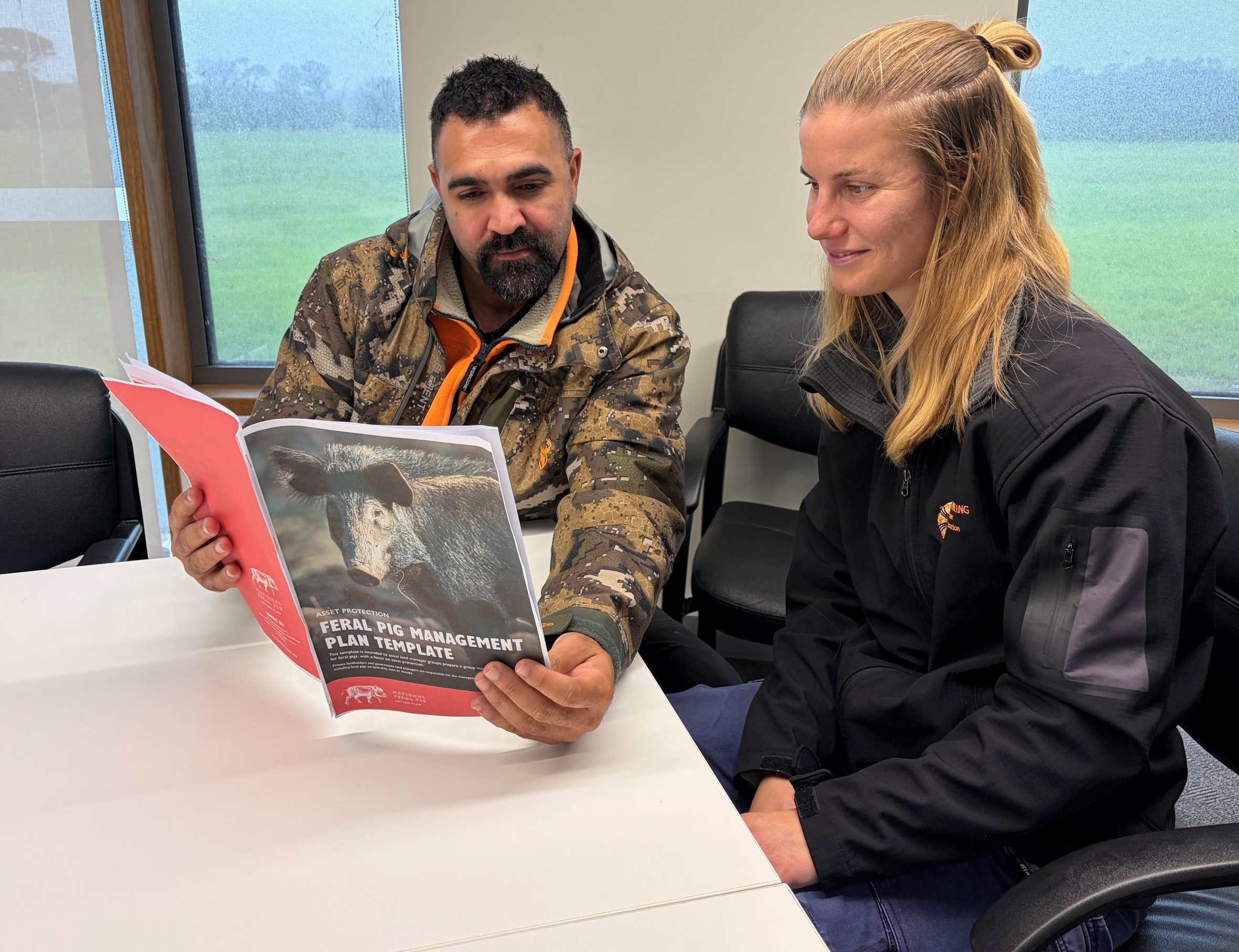
Gunditj Mirring Traditional Owners Aboriginal Corporation Invasive Species Officers, Brad Williams and Stacey Koprdova, review the new templates to assist in local group feral pig management planning.

Develop a detailed outline of how the plan will be put into action

The group needs to decide who will be driving the operation, who will carry out what tasks and when, how information will be collected and managed, who will pay the costs of management and any other details related to implementation of the plan.

It is also essential to define how information will be communicated among stakeholders and participants (e.g. through regular meetings, newsletters, field days) so they have real input and ownership of the program, rather than it being conveyed in a ‘top-down’ manner.

Strategic pest management is when control is carried out according to the plan of action. Coordination of control with adjacent land managers is the best approach and is more likely to occur if key stakeholders have been involved in developing the plan from the start.

It is vital to keep everyone motivated and on track during this stage of the plan to ensure that the desired outcomes are achieved.